The north of Lanzarote: Haría, Órzola, Famara and La Graciosa in a day
Updated September 6, 2026 · 7 min read
Anyone holidaying on Lanzarote almost certainly stays in the south or the middle of the island: Playa Blanca, Puerto del Carmen, Costa Teguise. What made the island famous largely lies elsewhere. North of the Arrecife–Famara line, in the municipalities of Teguise and Haría, stand most of César Manrique’s buildings, the highest sea cliff in the archipelago, and the only port from which the ferry to the eighth Canary Island departs.
The distances are short by Canary Islands standards, yet they still matter for a single day out. From Puerto del Carmen to Órzola, the northernmost village, allow a good hour; from Playa Blanca more like an hour and a half. That sounds harmless, but it means the north is not an afternoon outing – it is a full day, or two.
Why the north looks different from the rest of the island
The trade wind comes from the northeast, and the north is the first thing it hits. That makes it a touch cooler, more often cloudy, and almost always windier here than on the south coast. It is also green here, at least by comparison: thousands of palm trees stand in the Valley of Haría, while thirty kilometres further south there is nothing but lapilli.
The second difference is age. The lava fields in the south are barely three hundred years old. The north is much older, eroded, cut through by ravines – at its highest point the Risco de Famara drops away almost sheer for around six hundred metres, and the island’s highest point, the Peñas del Chache at a good 670 metres, sits on the same ridge.
A route that works
There is really only one sensible direction to drive the north in, unless you want to take the same road three times. This order has proved itself:
Cueva de los Verdes and Jameos del Agua in the morning. Both lie in the Malpaís de la Corona on the east coast and belong to the same lava tube left behind by the Monte Corona volcano. What they cost and what is inside is covered in What to see in Lanzarote; here it is the timing that matters. From late morning onwards, the coaches stand outside both addresses, and the day trips from the resort towns all arrive in the same window. Anyone there at ten walks through an almost empty tunnel.
Up to Haría at midday. The road winds up out of the Malpaís in hairpin bends, and from the Mirador de Haría you look down over the Valley of the Palms. The village itself is the most liveable-in on the island: low white houses, a shaded square, restaurants that do not look like they cater to tourists. Manrique spent his final years here; his house is now open to visitors.
Mirador del Río in the afternoon. Built further north on the ridge, looking out over the El Río strait to La Graciosa beyond. Guided tours to the Manrique buildings almost always put this one last, and rightly so: the view is best in low light.
Reverse the order and you queue at midday and get backlit views in the evening.
La Graciosa: the island without tarmac
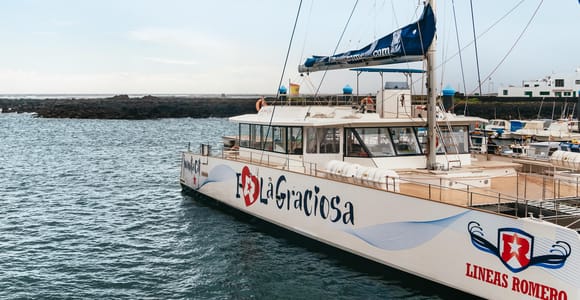
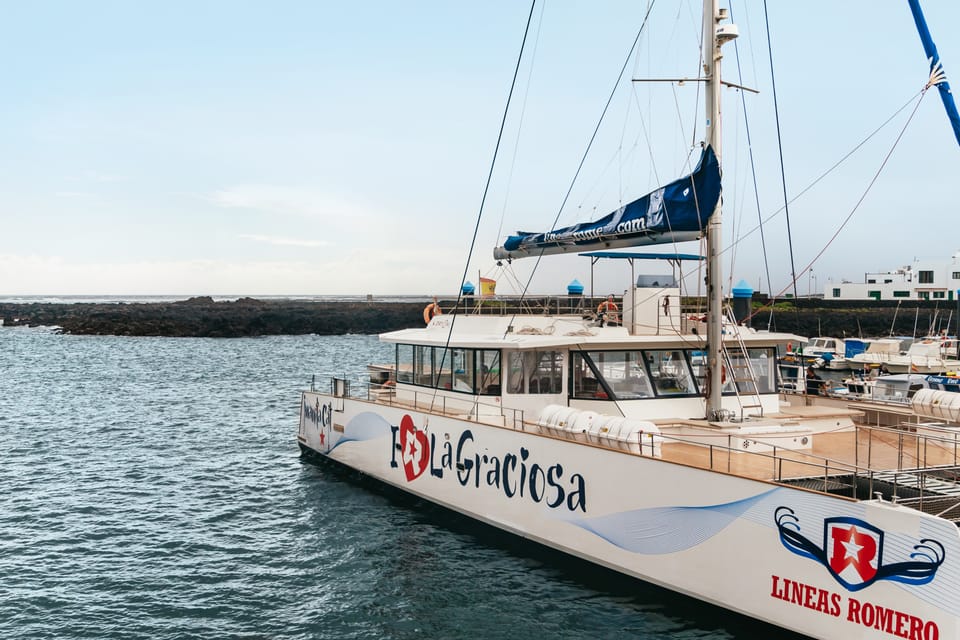
The ferry runs from Órzola to Caleta de Sebo, and the crossing takes around 25 minutes. The standard return ticket costs €29, with free parking at the ferry terminal – 4.7 stars from 1,096 reviews, one of the best-rated activities on the whole island.
Over there, everything is different. La Graciosa has around 700 inhabitants, no paved road and two villages. Sand lies in the streets, luggage is pulled along sandy tracks, and anyone wanting to go further than the edge of the village needs a bike or a four-wheel drive. Both are available on the spot: bicycles from €15, e-bikes from €20, guided four-wheel-drive trips to Playa de las Conchas from €40. The island belongs to the Chinijo Archipelago, the largest marine reserve in Europe, and since 2018 it has officially counted as the eighth Canary Island.
Anyone who does not want to plan it themselves can take one of the La Graciosa day trips from €20. The most booked is a six-hour catamaran trip around the island with lunch for €66, 4.5 stars from 2,006 reviews; a sailing day trip of the same length costs €72. There is also a combination of the Sunday market in Teguise and La Graciosa in a single day for €65 – seven hours, and honestly, that is tight.
When La Graciosa is not a good idea: if you only have half a day, if someone travelling with you gets seasick on small boats, or if you are picturing an island with shade. There is barely any. What to consider on a boat trip with children is covered in Boat trip with kids – minimum age?.
Where you can actually swim in the north
The north has a reputation for being rough, and that holds true for the west side. The east coast is a different story. At Arrieta lies Playa de la Garita, a dark sand beach in the village, sheltered and shallow enough that local families spend their afternoons there – the most unassuming swimming spot north of Costa Teguise.
And just before Órzola, on the road heading north, lie the small coves of Caletón Blanco: pale patches of sand between black tongues of lava, with knee-deep pools that stay behind as the water recedes. They are tiny, there is no shade and no facilities, and a north wind blows hard through them. But the water sits still, and for an hour before the ferry they are the best the north has to offer.
On the way there, at Guatiza, the Jardín de Cactus also sits right on the main road. It takes barely an hour and fits into almost any route through the north without forcing a detour.
Teguise: the capital that no longer is one
Teguise was the island’s capital until 1852 and remains the only place on Lanzarote with a historic centre that grew up organically – manor houses, a monastery, a square with a church. On ordinary days it is quiet there. On Sundays it is the opposite: the craft market fills the entire centre, and anyone turning up without a plan spends half an hour looking for a parking space.
Both are arguments, but not the same one. Anyone who wants to see the village comes on a weekday. Anyone who wants the market accepts Sunday and the crowds that come with it.
Famara: the beach you do not swim at
Caleta de Famara is a low-rise village on a beach that lies open for over six kilometres, with the sheer wall of the Risco at its back. It is the most striking stretch of coast on the island and the least suited to swimming: the Atlantic rolls in here unbroken, there are currents, and calm days are the exception.
That is exactly what makes it Lanzarote’s surf beach. Surf lessons in Famara start from €45, usually with pick-up from the resort towns. With small children by the water, though, Famara is the wrong place – where you can and cannot swim in the north is set out in Lanzarote with kids, and for the very youngest in Lanzarote with a baby.
The north off the road
The tracks through the Malpaís and up onto the ridge are the reason why the most-reviewed tour on the whole island is an off-road drive: a guided buggy trip from Costa Teguise to the Peñas del Chache, €150, 4.7 stars from 5,361 reviews. That is a lot of money for two to three hours, and the number of reviews shows that people spend it anyway. Further buggy and quad tours start from €40.
For those who would rather walk: the ridge path along the Risco de Famara is freely accessible and unsecured. In windy conditions it is no place for children or for anyone afraid of heights.
When you should skip the north
On a day with a north wind and low cloud, the north looks like Ireland. That can be beautiful, but it is not what people book the Canary Islands for – on those days the south is the better bet. The same applies if the group is small and prone to whingeing: driving time is the price of this day out, and with a toddler in the back seat that price is high. What works better at that age is covered in Lanzarote with a toddler.
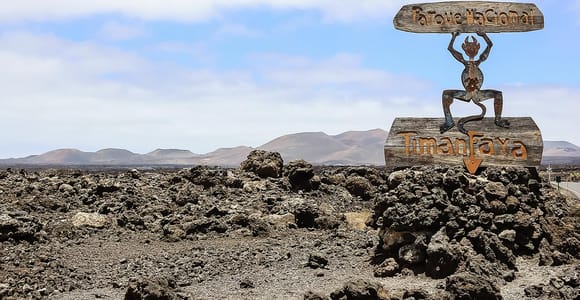
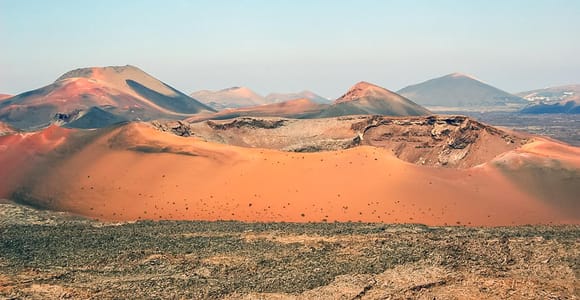
And anyone with only a single day for excursions should head south to Timanfaya, not here. The national park is what sets this island apart from every other; the north is what justifies a second holiday here. Everything bookable at a glance is on the page Things to do in Lanzarote.