Why Lanzarote has no high-rises — and who made that stick
Updated October 1, 2026 · 7 min read
The short answer: there is exactly one tall building on the island, the Gran Hotel in Arrecife, and it dates from 1974. Everything else stayed low because, from the mid-1960s, César Manrique pushed the island council for low building, no billboards and no overhead cables – and because that practice was actually enforced from the 1970s onwards, at exactly the moment mass tourism took off. What there isn’t is a reliable figure for the height limit; the two, three or four storeys that circulate contradict each other.
If you want to see this in a single day without driving yourself: the eight-hour guided Lanzarote: Legacy of César Manrique Guided Tour links five of his sites – the Cactus Garden, Mirador del Río, the farmer’s monument, Jameos del Agua and the Foundation – from €83 per person, 4.7 out of 5 from 220 reviews.
See availability and prices for the Legacy of César Manrique tour
Fly into Arrecife and the island does something the other Canaries do not. There is no wall of towers behind the beach. Villages stay low, white and flat-roofed, and the black ground stays visible between them. Visitors notice it within an hour of landing, and almost everyone is told the same one-line explanation: César Manrique banned tall buildings.
That version is roughly right and wrong in the details, which matters if you like knowing what you are looking at. Here is what holds up.
The building you can see from everywhere
Stand anywhere along Arrecife’s seafront and one structure breaks the skyline: the Gran Hotel. According to the building’s record, it is 54 metres tall with 15 floors above ground, and it was completed in 1974. It is the tallest building on Lanzarote, and the tallest in the Canary Islands outside Tenerife and Gran Canaria.
It also burned. A fire in November 1994 gutted the building, which was empty at the time, so nobody was killed; the structure survived, and the façade was later rebuilt and modernised with a steel-and-glass crown. That is why the tower looks newer than 1974 from the promenade.
The hotel is the single most useful thing to look at on this subject, because it is the exception that proves the rule existed. Nothing else on the island competes with it, and nothing built since has tried.
What is documented, and what is only repeated
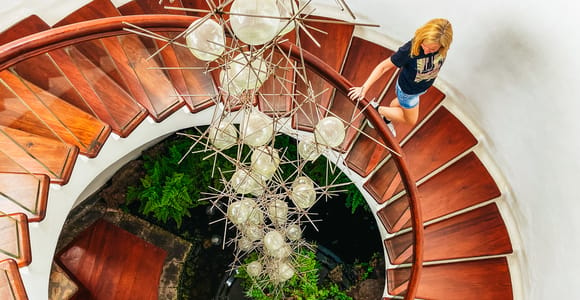
Manrique came back to Lanzarote in the mid-1960s after years abroad and spent the rest of his life arguing — publicly, loudly and with the island council — for low building, no billboards along the roads, no overhead cables in the villages and buildings that took the volcanic ground as they found it. The Foundation at Tahíche is that argument built at full scale, and the island’s tourist centres were the demonstration that it could pay.
Here is the honest part. The height limit is repeated everywhere as a number, and the number is not stable. Some accounts say no building above two storeys, others three, others four. They cannot all be right, and we have not found one authoritative text that settles it. So this guide will not tell you the figure, because a confidently wrong number is worse than none — and you will see for yourself that villages sit well under any of the three.
What is not in dispute: the practice was enforced from the 1970s onwards, it reshaped how the island was developed at exactly the moment mass tourism arrived, and UNESCO designated the whole island a Biosphere Reserve in 1993, the year after Manrique’s death in 1992.
The colours are a convention, not an accident
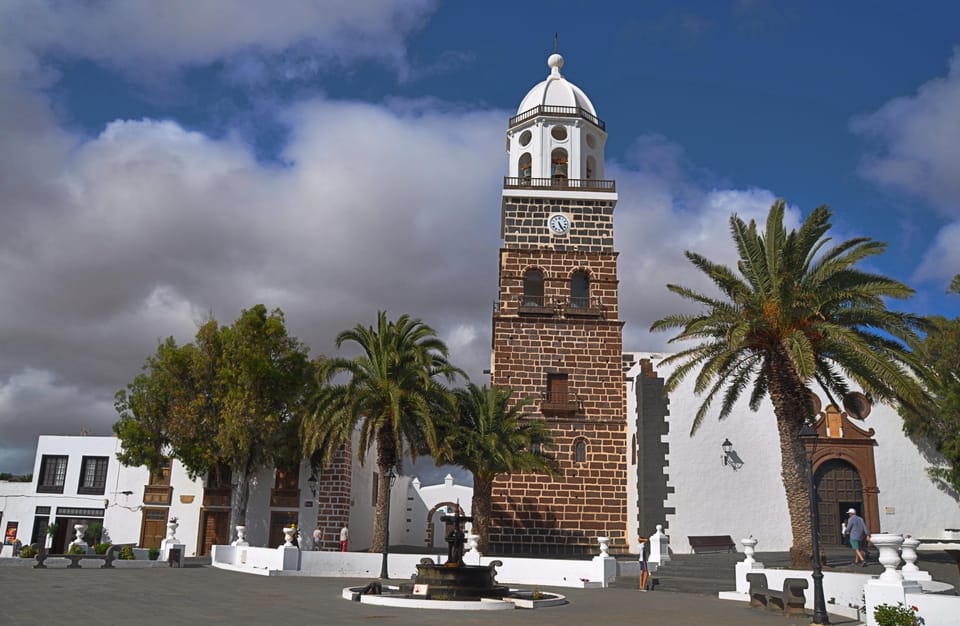
The other thing you notice is the palette. White walls almost everywhere, with woodwork, doors and shutters picked out in green inland and blue near the coast. Brown appears on older rural buildings.
This is the visual signature people remember from Lanzarote, and it is the reason a village here reads as one composition rather than a hundred separate decisions. Whether any given house is following a rule, a grant condition or simply what the neighbours did, the effect is the same: the island looks deliberate. Once you know to look for the green-inland, blue-coast split, you cannot stop checking it on every drive.
What this means for your week
It changes what a view costs. Because nothing is stacked, resorts spread sideways instead of upwards, and a sea view is not something you buy by going up eleven floors. On the other hand, distances between where you sleep and where you eat are longer than the equivalent resort elsewhere.
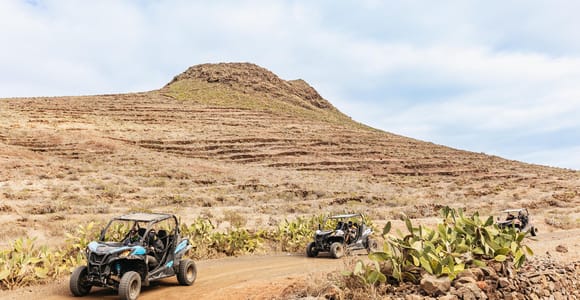
It also changes what the landscape gives back. The reason a drive across the lava fields works as sightseeing at all is that there is nothing tall interrupting it, and the reason viewpoints like Mirador del Río are worth an entrance fee is that the view has not been built into. That was the trade: no towers, and the island stays the attraction.
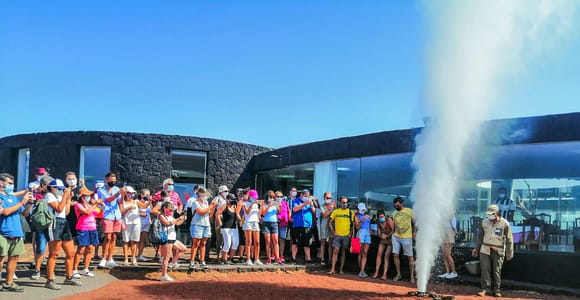
And it explains the tourist centres. Jameos del Agua, the Cueva de los Verdes, the Jardín de Cactus and Timanfaya are all the same proposition — bring visitors to the volcanic ground itself rather than to a resort strip. They are listed together on our César Manrique sights page, and the pricing that comes with them is covered in our guide to combined tickets.
Where to see the argument for yourself
Three stops, in this order, make the point better than any museum caption.
Start in Arrecife with the Gran Hotel, ideally from the Charco de San Ginés side. Look at it, then turn around and look at everything else. That contrast is the whole subject in one glance, and it takes five minutes.
Then drive inland to Teguise or up to Haría. Both are low, white and dense, and both show you what the island looked like before tourism and what the rules were protecting. Haría’s palm valley is also where Manrique spent his last years.
Finish at a Manrique site built into the ground rather than onto it — the Foundation at Tahíche or Jameos del Agua. By then the idea is obvious without anyone explaining it.
Without a hire car: three guided tours to the same sites
If you’re not driving yourself, the only way to reach the Manrique sites is a guided tour or a taxi. These three visit the buildings this article is about.
| Tour | Duration | from | Rating | Best for |
|---|---|---|---|---|
| Legacy of César Manrique | 8 hours | €83 | 4.7 from 220 reviews | five sites in one day, best rating of the three |
| César Manrique Full-Day Tour | 8–9 hours | €85 | 4.6 from 445 reviews | Foundation, Jameos, Cactus Garden, farmer’s monument |
| Manrique tour with Cactus Garden & LagOmar | 4 hours | €67 | 4.3 from 16 reviews | half a day, plus the cave house at Nazaret |
See availability for the César Manrique Full-Day Tour
One caveat before you repeat any of this
Lanzarote’s development story is not a clean fable about one artist saving an island, and locals will tell you so. There has been plenty of building since, plenty of legal argument about it, and plenty of disagreement about how well the rules have been applied. What survives is visible from the air and is unusual enough to be worth understanding — but if someone in a bar disputes the tidy version, they are not wrong to.
Our recommendation
For most people: the eight-hour Legacy of César Manrique tour for €83. With 4.7 out of 5 from 220 reviews, it has the best rating of the three, and it takes in Mirador del Río – the place where the link between “nothing tall” and “open view” is clearest.
Anyone who only wants to give up half a day: the four-hour tour with Cactus Garden and LagOmar for €67. With 16 reviews, it’s the youngest listing of the three – read the reviews before you book.
See prices and dates for the Manrique tour with Cactus Garden and LagOmar
Anyone with a hire car: no tour. The Gran Hotel, Teguise, Haría and the Foundation at Tahíche sit close enough to link up in a day of your own – and the contrast this article is about becomes clearer on the road between the villages than at any single stop. The routes are covered in Lava fields by car and What to see in North Lanzarote.
These tours aren’t for you if you’re only interested in the building history: none of them is an architecture tour. They visit Manrique’s buildings, not the island’s planning rules.